Chapter Five: Battelfield
- Hadiza Bagudu
- Jul 9
- 8 min read
Updated: 4 days ago
The war with the Musgum took place at the foot of the Mandara mountain, were the Habe were suspected to be hiding. According to history, their forefathers had been driven there by the Fulani in the early 17th century, during the Jihad led by Modibbo Adama, a disciple of Usman the Great. They hid in the rocky terrains because it prevented the Fulani cavalry from following them into the crevices. The Musgum, along with the Massa and Sumeya clans were the original inhabitants of the region and the Fulani later arrived as nomadic cattle herders who wandered into their territory in search of greener pastures. The original inhabitants accommodated them, gave them lands, and they thrived. Before long, the Fulani began to take advantage of them and started claiming the land as theirs. Inspired by the Jihad in Sokoto, they acquired a newfound superiority complex over the natives, whom they referred to collectively as Habe due to their practice of idol worship, while referring to themselves as Fulbe. They were not satisfied with merely co-existing, but also sought to rule and enslave them. The Fulbe were breeders of horses and excellent blacksmiths. Because of that, they had some of the best weapons of the time. Over the centuries, backed by the Sokoto caliphate, they fought the natives and took over their lands and property. Those who embraced Islam were spared while those who did not were killed or sold into slavery. Their women were forced to become concubines for the royal families. The lucky ones escaped and hid in the Mandara Mountains.
Their ancestors may have relented and chose to flee instead of fighting, but the new generation of the Musgum, Sumeya and Massa were fearless. They were filled with resentment for the Fulani and were bent on taking back what they believed was rightfully theirs. And they had been strategizing and training for many years for those self-same reasons. They came out in full force and faced the enemy with unflinching courage.
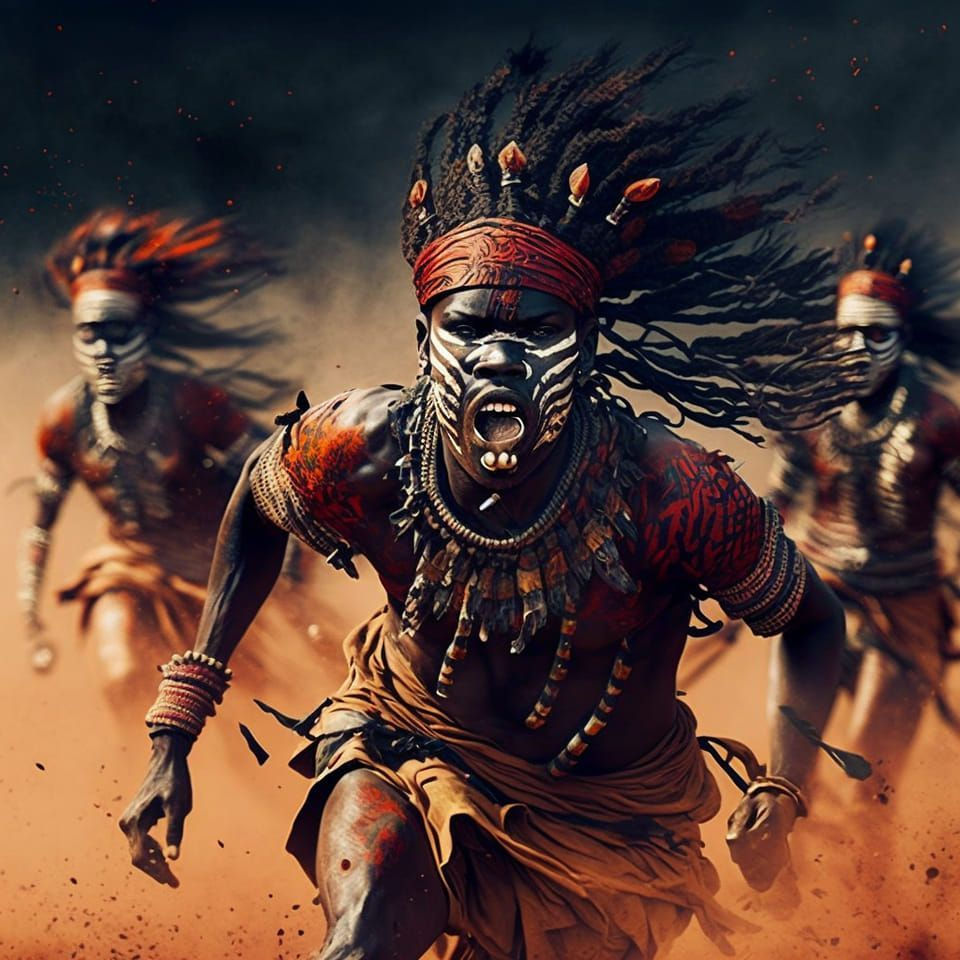
The Musgum went to war with an army of one hundred and fifty men led by their chief. The army was stationed facing the east surrounded by mountains from the rear which they intended to retreat to. Unlike the Fulani soldiers who were mostly cavalry, the Musgum were foot soldiers, with only the Sarkin Musgum and ten others on horses, the ones they must have stolen when they attacked the traders a few weeks back, Hayah thought. They also had inferior weaponry compared to the Fulani but Hayah also observed that they were better prepared this time than at previous battles.
The Fulani on the other hand went out to battle with an army of one thousand, three hundred men, a very clear numerical advantage over their enemies. But for some reasons, the Musgum didn’t seem scared at all. Each Fulani soldier was armed with the finest of swords and fortified battle regalia, most of which were bought from Arab traders. One thousand of the men were on horses while the remaining three hundred were on foot. They would be able to annihilate the Musgum army within minutes-or so they thought.
As earlier stated, the Musgum did not seem afraid at all. In fact, they seemed to have been possessed by a strange courage. Hayah reviewed the situation starting from their chief to his men and couldn’t help but wonder if they had something up their sleeves or they were simply being suicidal maniacs.
He had a gut feeling something was amiss, but he dismissed it as mere paranoia on his part. He wasn’t in the mood to shed any blood that day. In fact, since he met Fantah, he had been experiencing strange funny changes on the inside. All he wanted, was to be with her. Suddenly, he was tired of all these unending and pointless battles.
Wanting to move things along, he stepped forward, flanked by his four lieutenants – Adamu, Arabu, Umaru and Bawuro, to have a final peace talk with the Sarkin Musgum, as was customary before battles in those days.
“If you surrender now, we will let you go back home alive and in peace.” Hayah yelled.
“We will not surrender. We came here to fight and avenge our forefathers.” The Sarkin Musgum yelled back.
“So be it!” Hayah yelled back, and then gave the signal for his men to attack.
He wanted to get it over with as soon as possible, and go home. In fact, based on the enemy’s fewer numbers, he figured it would be over in a few minutes and he will return to Maroua with a favourable battle report for the Lamdo by sundown. After which, he would leave early for Ndokula the next day to go and see his beloved Fantah. That thought filled him with so much joy that he almost forgot he was at the battlefield.
Within minutes, the battlefield was alive with the sound of clanking swords against each other. There were screams of courage and pain. Blood was everywhere. After about ten minutes of intense battle, the Musgum army turned around and fled. As expected, the Fulani cavalry gave chase.
They pursued them to the foot of the mountain, and then deep into the elevated and rocky terrains. Just as they were about to retreat, they heard a blood-curdling scream as another column of one hundred soldiers descended on them from the left and another from the right led by Sarkin Massa, and started attacking them on both sides. The Fulani were disoriented for a few seconds by the element of surprise by the ambush, but quickly, they regrouped and began to fight back. Their horses were having difficulties moving in combat formation due to the elevation of the area and the sharp jagged rocks. And because of that, the Fulani soldiers kept falling off their horses to their eventual death, with most of their horses injured or killed by the sharp jagged rocks in the process.
In the meantime, the Musgum army suddenly turned around and started to attack them from the front with renewed vigour. So, this was the trick, Hayah thought. That was why they were not scared at all. They had studied the Fulani army and had anticipated their moves. They lured them to this unforgiving terrain in order to ambush them, and it paid off. He felt a raging anger at himself for this temporary setback, and for his inability to have foreseen this old war trick coming.
Hayah yelled new orders to his men to fall back, but before they could, another column of one hundred and eighty soldiers led by Sarkin Sumeya emerged from behind the rocks and blocked them from the rear. The Fulani were being hit from the front, the back, and all sides. They were completely boxed in and left with no choice but to fight to the death.
It had been the Sarkin Musgum’s plan all along. And it worked. He reasoned that the Fulani’s victories were not only attributable to superior weapons and numbers, but also due to their strategy of divide and rule, which had been so successful because the indigenous tribes had been fighting them separately, and to their inevitable destruction. Not only were the Fulani in possession of superior artillery, they also had extensive training and were always battle ready. They never laid down their arms, a vital reason why they always defeated their foes with minimal losses. He decided that if they were ever going to stand any chance against the Fulbe, they had to unite their forces. They also needed the element of surprise, because no matter how hard they trained, they were still at a disadvantage. But with the surprise element, they may be able to confuse the enemy enough to deal them a mortal blow so heavy, that they wouldn’t dare come after them again. And that was exactly what happened. To him, it was a very satisfying outcome indeed.
But he made an error of judgment when he overlooked something very important. For the Fulbe, it was not just a war of attrition, but a war of ideology and identity. Every one of those Fulani soldiers believed that they were fighting for a higher purpose and that there would be a reward if they died in the process. Either way, they never lose. That belief filled them with a lot of courage. So, instead of cowering and succumbing to defeat, Hayah yelled at his men to fight to the death, and they were filled with renewed vigour! His men followed suit. The war began to take a different turn. The Fulbe charged at the Habe! The Habe shouted “Eeiihoo!” and charged back at them. Every time the Habe hit the Fulbe, they hit back harder. They fought back with the ferocity of a cornered animal. The sound of metal against metal was deafening and terrifying. Heads were flying, and men were falling like leaves. It was an orgy of blood and guts. The ash-grey colour of the rocks turned red with the blood of the wounded and the dead. After about twenty minutes of pure gore, the Habe turned around and fled for real this time. They were flummoxed by the turn of events against them, and the Fulbe decided it was unwise to give chase, so they tended to their wounded.
The Musgum lost eighty-seven men that day, the Sumeya lost seventy-one and the Massa lost one hundred and one. But the Fulani, even though victorious, lost over five hundred men. The element of surprise worked and they suffered heavy losses. Even though they won the battle, it was a Pyrrhic victory.
***
Hayah could not believe what had just happened. After picking his bottom jaw off the floor, he began to process the series of events in his head. They were tricked. The Habe outsmarted him. Despite his training and sharp instincts, they were still able to pull a fast one on him and he lost almost half of his men in the process. His pride was greatly wounded and he was enraged.
He glanced across the battlefield and saw the scores of dead and wounded men and horses, and felt bile climbing up his throat. It was his fault and he knew it. Not only was he distracted by his romantic thoughts, but he also ignored the warnings of his gut feelings. One of his strengths was his sharp instincts that never failed him and he was angry at himself for ignoring it. Most importantly, he evaluated the enemy by their size only, which was a flawed premise in war strategy, to the exclusion of others factors.
“We seriously underestimated them.” Hayah thought about that very important rule of war and promised never to make the same mistake ever again.
He should have seen it coming. The Sarkin Musgum was way too confident and eager for this confrontation to take place, and the outcome showed he was well prepared for it. If the new trend is allowed to continue, they would end up losing the war to the Habe entirely. He felt chills up his spine.
His men were also angry. They went around to checking for any surviving Habe, instead of taking them as hostages, they stabbed them to death out of anger. He was too upset to stop them. It was a horrible day, and he contemplated what to tell the Lamdo of Maroua.
Hayah was particularly upset. Not only for the losses, but because war was an area of special interest for him, and something he was good at. Coming from Sokoto, the seat of Fulani power, the place where the most famous war of ideology in African history began; a place where every noble male was trained all their lives in warfare for the protection of their fatherland and religion, he arrived Maroua at a time of war with the Musgum, Massa, Sumeya, who the Fulani collectively refer to as Habe, and he was instrumental in their often-routine defeat by the Fulani which endeared him to the Lamdo Maroua as his favourite General. The constant string of victories he had won him favours, not just from the Lamdo but also the love of the people. The people had long heard of a great man, a Saviour, who would come from the East to emancipate them from the unbelievers. For some time, he was able to fulfil that role, and they believed he was the one. But, these damned Habe were threatening to take that away from him. He had made the grave mistake of underestimating them, and he would not repeat that again.
[End of Chapter Five]
✦ Thank you for reading. Kindly comment your thoughts on this chapter below.


Comments